

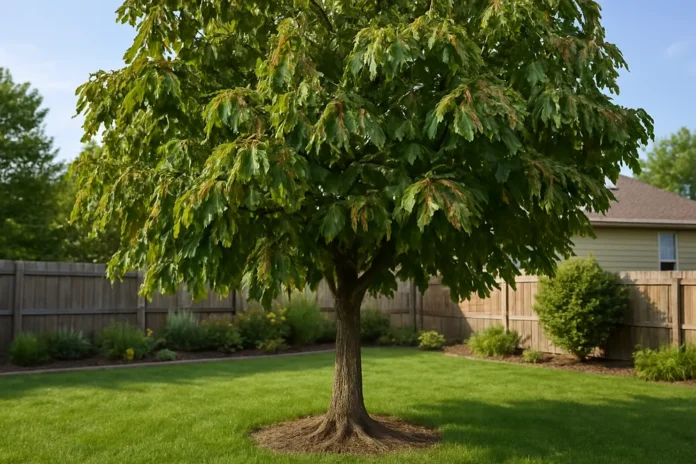
Maple tree leaves usually droop because the roots are under stress from too much water, too little water, heat, transplant shock, or disease. When roots cannot move moisture properly, the leaves lose firmness and hang limp.
When a maple tree suddenly looks tired and its leaves hang down instead of sitting flat and open, it usually means the tree is struggling to move water the way it should. In my experience, drooping is one of those symptoms that can look dramatic fast, even when the underlying problem has been building quietly for days or weeks.
The tricky part is that drooping leaves do not always mean the same thing. A thirsty tree can droop, but so can a tree sitting in soggy soil. Heat can cause temporary wilt in the afternoon, while root damage, trunk injury, transplant stress, and disease can cause a more persistent decline. The pattern matters more than the symptom alone.
If you look closely at when the drooping started, whether the soil is wet or dry, and whether the whole tree or just one section is affected, you can usually narrow the cause pretty quickly. That makes it much easier to avoid the common mistake of watering more when the real problem is already too much moisture.
What Drooping Maple Leaves Usually Mean
Leaves droop when they lose internal water pressure, also called turgor. Healthy maple leaves stay firm because the roots absorb water and the tree moves it steadily upward through the trunk and branches. When that flow is interrupted, the leaves soften, curl slightly, or hang limp.
That interruption can happen for several reasons. The roots may not have enough moisture available. They may be sitting in saturated soil with too little oxygen. They may be damaged by construction, compaction, lawn equipment, or recent planting. In some cases, a vascular disease blocks water movement inside the tree even when the soil moisture looks fine.
- If the entire canopy droops at once, think first about root zone stress or severe weather.
- If only one limb or one side wilts, root damage or a disease issue becomes more likely.
- If the leaves perk up by evening, heat stress may be the main trigger.
- If drooping is followed by browning leaf edges or early leaf drop, the stress has probably gone on too long.
When I diagnose a wilted maple, I pay close attention to timing before I do anything else. A tree that droops only in the hottest part of the day is a very different case from one that is limp in the cool morning after a mild night.
Water Stress Is the Most Common Cause
Underwatering and Drought Stress
During hot, dry weather, maples can lose moisture faster than their roots can replace it. This is especially common with young trees, newly planted trees, and shallow-rooted maples growing in turf. Dry soil leaves the roots unable to keep up, so leaves droop first and may later turn crispy at the edges.
A drought-stressed maple often shows other clues besides limp foliage. The leaves may look dull instead of glossy, some may curl inward, and the tree may begin shedding interior leaves early. You may also notice that the ground under the canopy is hard, powdery, or cracked several inches down.
Overwatering and Waterlogged Roots
It surprises many gardeners, but too much water can create the same drooping look. Maple roots need oxygen as much as they need moisture. In constantly saturated soil, roots cannot breathe well, fine feeder roots die back, and the tree loses the ability to support its leaves.
This is common in heavy clay, low spots, lawns with automatic irrigation, and planting holes that act like bathtubs after rain. A waterlogged maple may have drooping leaves that also turn pale, yellowish, or blotchy. The soil may feel wet several days after rainfall, and the trunk flare may stay damp too long.
- Dry-stress drooping is often paired with dry, hot soil and browning leaf margins.
- Overwatering drooping is often paired with persistently wet soil, yellowing, and slower overall growth.
- Newly planted trees are vulnerable to both because their root systems are still limited.
- Trees surrounded by lawn often suffer because shallow grass roots compete for water while sprinklers keep the top layer too wet.
If you are unsure whether the tree is too dry or too wet, do not guess from the surface. I like to check soil moisture 4 to 6 inches deep in several spots near the drip line because the top inch can mislead you badly.
Heat and Weather Can Cause Temporary Wilt
Maples can droop during extreme heat even when the soil is reasonably moist. On very hot, bright, windy days, leaves may lose water faster than the roots can replace it. This is more likely in exposed sites, reflected heat near pavement, and after a run of dry weather.
Temporary heat wilt usually improves in the evening or by the next morning. The leaves may look soft and tired during the worst part of the day, then recover once temperatures drop. That pattern is different from persistent drooping, which points to a deeper root or health issue.
Storms can also trigger drooping. Strong wind increases moisture loss, and sudden temperature swings can stress newly expanding foliage in spring. If the tree was recently pruned, transplanted, or root-pruned by nearby digging, hot weather stress tends to hit it even harder.
- Afternoon droop with morning recovery often suggests heat stress.
- Heat stress is worse for trees planted in narrow lawn strips or near driveways.
- Young Japanese maples and recently planted shade maples are especially sensitive.
- Repeated heat wilt can progress into scorched edges, leaf curl, and early drop if the tree stays stressed.
Root Problems Often Sit Behind Lasting Droop
Compacted Soil and Damaged Roots
Maples depend on a broad network of shallow feeder roots. When that area is compacted by foot traffic, parked vehicles, construction, or repeated mower use, the soil loses pore space and roots struggle to access both oxygen and water. A tree can look wilted even when moisture is technically present.
Root injury can happen quietly. Trenching for irrigation, edging around the tree, removing large surface roots, or changing the soil grade can all reduce uptake. If one side of the tree suddenly droops while the other side looks normal, I start thinking about localized root loss.
Mulch and Planting Depth Issues
A maple planted too deeply often declines slowly. If soil or mulch is piled against the trunk flare, the base stays too damp, roots may circle or suffocate, and the tree never establishes strong function. The symptom may show up as weak growth, small leaves, and recurrent drooping during stress periods.
Volcano mulching is especially harmful. Thick mulch pressed against the trunk traps moisture and heat where the bark should stay exposed and dry. Over time that can invite decay, girdling roots, and chronic canopy stress.
I have seen many struggling maples improve simply because the root flare was uncovered. If you cannot see where the trunk widens into the main roots, the tree may be buried too deeply for long-term health.
Transplant Shock Can Make a Maple Look Limp
If your maple was planted recently, drooping may be part of transplant shock. A transplanted tree loses a large share of its root system during digging, so the top growth temporarily demands more water than the roots can supply. That imbalance often shows up as wilt, leaf scorch, and slow establishment.
This is especially common when planting happens in late spring or summer, when the canopy is active and weather is warm. The tree may look fine at first because the nursery root ball was moist, then begin drooping once the surrounding soil dries or stays too wet.
- Drooping on a newly planted tree often appears within the first few weeks.
- Small root balls dry much faster than surrounding ground.
- Trees planted too deep or into poorly drained backfill struggle longer.
- A recently transplanted tree may shed some leaves even if it eventually recovers.
Transplant shock does not always mean the tree is dying. It means the tree needs time and stable conditions to rebuild roots. The biggest danger is overcorrecting with constant watering, fertilizer, or heavy pruning while the roots are already stressed.
Diseases and Pests That Can Cause Wilt
Verticillium Wilt
Verticillium wilt is one of the more serious reasons maple leaves droop. This soilborne fungus enters through roots and blocks water-conducting tissue, causing sections of the tree to wilt even when moisture seems adequate. One branch may collapse first, or one side of the canopy may leaf out weakly and then droop.
Other signs can include scorched leaf edges, smaller than normal leaves, branch dieback, and streaking in the sapwood under the bark. Not every wilted maple has verticillium, but it is worth considering when drooping is uneven and persistent.
Root Rot and Cankers
Root rots, often tied to poor drainage, interfere with water uptake and can produce the same limp, thirsty appearance as drought. If the lower trunk shows soft bark, oozing, cracking, or fungal growth, the problem may be more than simple watering error.
Cankers can also disrupt sap flow in individual branches. When only one limb droops and the leaves on that section later die, inspect the branch and trunk closely for wounds, sunken bark, or splitting.
Insects and Sap Stress
Pests are less often the primary cause of whole-tree drooping, but heavy infestations can add enough stress to matter. Aphids, scale, and borers weaken a tree over time. A stressed maple under pest pressure may wilt faster during heat or drought than a healthy one would.
- Uneven wilt often points toward vascular disease, cankers, or localized root injury.
- Whole-tree limpness is more often related to moisture, roots, or severe heat.
- Oozing bark, dead twigs, and trunk wounds raise concern beyond routine watering issues.
- Pest damage usually shows up alongside other stress signs rather than as the only symptom.
How to Tell Which Cause Is Most Likely
The fastest way to narrow this down is to compare four things: soil moisture, timing of the droop, how much of the tree is affected, and whether there are added symptoms like yellowing, scorch, dieback, or trunk damage. These clues usually point you in the right direction before you make any major change.
- Check the soil several inches deep near the drip line, not just near the trunk.
- Notice whether the leaves droop all day or only in the afternoon.
- Look for a whole-canopy problem versus one branch or one side of the tree.
- Inspect the base of the trunk for mulch piled high, buried flare, wounds, or soggy conditions.
- Look up into the canopy for dead twigs, scorched edges, yellowing, or unusually small leaves.
A tree that droops in dry soil after a hot week is usually dealing with drought stress. A tree in wet ground that stays limp day after day often has root suffocation or rot issues. If the tree is newly planted, transplant shock stays high on the list. If one section wilts sharply while the rest looks normal, think root injury, canker, or verticillium wilt.
What Helps a Drooping Maple Recover
Recovery depends on matching the remedy to the cause. The goal is not to force the leaves to perk up overnight. The goal is to restore healthy root function and reduce stress so new growth develops normally.
- Water deeply but only when the root zone actually needs it.
- Improve drainage around chronically wet trees and reduce unnecessary irrigation.
- Pull mulch back from the trunk and keep the root flare visible.
- Add a 2 to 3 inch mulch layer over the root zone, but keep it a few inches away from the trunk.
- Avoid fertilizing a stressed maple unless a soil test shows a real deficiency.
- Protect the root area from compaction, digging, and mower injury.
- Prune only dead or clearly damaged wood unless a professional advises more.
For a young tree, consistent watering and proper mulch can make a major difference. For an older tree with one-sided wilt, trunk injury, or possible disease, recovery may depend on how much vascular tissue is still functioning. Some problems improve in a season, while others become long-term management issues.
Change one thing at a time when possible. If you water more, fertilize, prune, and treat for pests all at once, you lose the chance to learn what actually helped and you may pile extra stress onto a weakened tree.
When to Call an Arborist
Some drooping maples can be managed at home, especially when the issue is straightforward drought, heat, or minor transplant stress. But certain warning signs deserve a closer professional look because they may involve structural decline, disease, or serious root loss.
- A large established maple suddenly wilts without an obvious weather reason
- Only one major branch or one side of the canopy is collapsing
- The trunk has cracks, oozing, missing bark, or fungal growth
- The tree remains droopy even though soil moisture has been corrected
- Branches are dying back rapidly or the canopy is thinning fast
- Nearby excavation, grading, or construction happened within the root zone
An arborist can help separate reversible stress from diseases like verticillium wilt or root rot. That matters because the right long-term decision may be treatment, monitoring, site correction, or in severe cases, removal before the tree becomes hazardous.
FAQ
Can a Maple Tree Recover From Drooping Leaves?
Yes, many maples recover if the cause is temporary stress such as drought, heat, or transplant shock. Recovery is less certain when drooping comes from severe root damage, trunk injury, or vascular disease.
Should I Water My Maple More if the Leaves Are Drooping?
Not automatically. Drooping can come from dry soil or overly wet soil, so extra water only helps when the root zone is actually drying out.
Why Are Only Some Branches on My Maple Drooping?
When only part of the tree droops, localized root injury, a canker, branch damage, or a disease such as verticillium wilt becomes more likely than simple drought.
Can Hot Afternoons Make Maple Leaves Droop Even if the Tree Is Healthy?
Yes, extreme heat can cause temporary wilt during the hottest part of the day. If the leaves recover by evening or the next morning, heat stress is a common explanation.
Does Mulch Help a Drooping Maple Tree?
Proper mulch helps by keeping soil moisture more even and protecting shallow roots from heat. It only helps when spread over the root zone in a thin layer and kept away from the trunk.
Can Overwatering Cause Maple Leaves to Droop and Curl?
Yes, saturated soil can suffocate roots and lead to drooping, curling, and yellowing leaves. This is common in heavy clay or sites with frequent irrigation.
How Long Does Transplant Shock Last in a Maple Tree?
Visible stress can last weeks to months, and full establishment often takes much longer. Young trees usually improve gradually as they rebuild roots, especially when watering and drainage are consistent.
Need help fixing a stressed tree fast? Read our guide to the best tree watering bags, root-zone mulches, and maple care tools to protect recovery and prevent repeat stress.
