

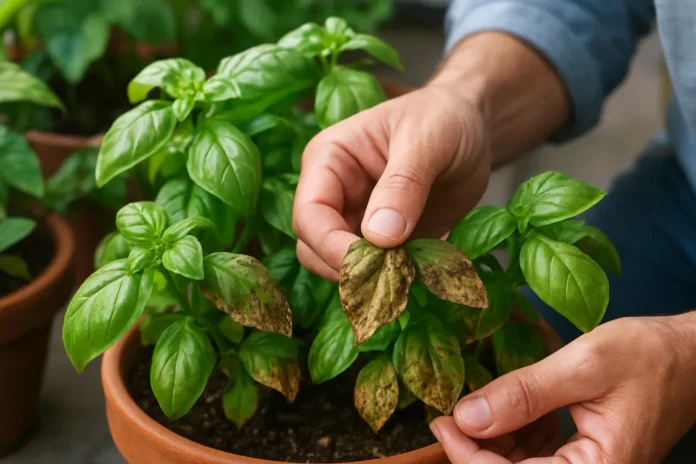
Basil leaves usually turn brown because of watering stress, cold temperatures, disease, sun scorch, or pest damage. Browning can show up as crispy edges, dark spots, or whole leaves collapsing depending on the cause.
Few herbs are as satisfying to grow as basil, so it is frustrating when those soft green leaves start spotting, crisping, or turning fully brown. In my experience, basil leaves turning brown is usually not a random problem. Basil reacts quickly to stress, and the way the browning appears often tells you a lot about what is going wrong.
Sometimes the issue is simple, like soil that stays too wet or a sudden cold night on the patio. Other times, basil is warning you about fungal disease, bacterial leaf spot, or feeding damage from pests. The good news is that if you catch the pattern early, you can often save the plant and keep new growth healthy.
What the Browning Pattern Can Tell You
Before changing anything, look closely at where the brown tissue shows up. Brown edges and crispy tips often point to moisture stress, dry air, salt buildup, or too much sun. Soft dark spots can suggest disease or overwatering. Whole leaves that turn limp and brown after a cool night usually indicate cold damage.
Also notice whether the problem is hitting old leaves, new leaves, or leaves on just one side of the plant. A basil plant with lower leaves browning first often has watering or airflow problems. Damage mostly on the top or outer leaves can be linked to hot sun or wind exposure. Random speckling with damaged tissue may mean pests were there first.
When I diagnose basil, I do not start with one damaged leaf. I compare several leaves from the top, middle, and base of the plant because basil often shows different clues in different zones, and that pattern is usually more reliable than a single spot.
Watering Problems Are the Most Common Cause
Overwatering and Soggy Soil
Basil likes evenly moist soil, but it does not like sitting in water. If the pot drains poorly or the soil stays constantly wet, roots struggle to breathe and can begin to rot. That stress often shows up as brown or blackened patches, drooping leaves, and stems that look weak near the base.
In containers, overwatering happens easily when a pot is too large for the plant, drainage holes are blocked, or heavy potting mix stays soaked too long. In the ground, dense clay soil and frequent irrigation can create the same problem. Browning from overwatering is often paired with yellowing, limp leaves, and a plant that never seems to perk up.
Underwatering and Drought Stress
Dry soil can also turn basil leaves brown, especially at the edges and tips. When basil repeatedly wilts in hot weather, leaf tissue dries out and becomes papery or crisp. This kind of browning tends to feel dry rather than soft, and it is common in small patio pots that heat up fast.
- Overwatered basil often has soft, limp, darkened leaves and wet soil that stays cool for days.
- Underwatered basil usually has crispy edges, drooping in the afternoon, and soil that pulls away from the pot sides.
- Both problems can happen on the same plant if it cycles between bone dry and soaked.
I like to water basil deeply, then wait until the top inch of soil feels dry before watering again. That rhythm keeps roots active and prevents the stress swing between swampy soil and severe dryness.
Cold Temperatures Can Damage Basil Fast
Basil is a warm-season herb that really dislikes cold. Even temperatures in the 40s can stress it, and anything close to frost can turn leaves dark, water-soaked, and then brown. Many gardeners are surprised when a plant looks fine in the evening and badly damaged the next morning after one chilly night.
Cold damage often affects exposed leaves first. They may look limp, almost translucent, then quickly dry and darken. If your basil was moved outdoors too early in spring, left near an air-conditioned vent, or kept on a drafty windowsill, temperature shock is a strong possibility.
- Night temperatures below about 50 degrees Fahrenheit can slow growth and stress basil.
- Frost or near-frost conditions can blacken leaves and tender stems.
- Cold wet soil makes damage worse by keeping roots sluggish.
Too Much Sun, Heat, or Wind Can Scorch the Leaves
Basil loves sun, but a plant that was grown indoors or in shade can scorch if it is moved suddenly into intense afternoon light. Sunscald usually appears on the most exposed leaves as tan, brown, or bleached patches that later dry out. The damaged areas often feel crisp rather than mushy.
Heat and drying wind can make the problem worse, especially in containers. A black nursery pot on a hot patio can overheat the root zone and speed up moisture loss, which leads to leaf edge browning and a tired-looking plant by the end of the day.
If only the outer or upper leaves are browning while shaded inner growth stays green, think exposure stress before you assume disease. Gradually hardening basil off before moving it into stronger sun helps prevent this.
Leaf Spot and Other Diseases May Be Involved
Fungal Leaf Spots and Downy Mildew
Basil can develop fungal problems when leaves stay wet, air circulation is poor, and plants are crowded. Brown spotting may begin as small lesions that expand over time. In humid conditions, downy mildew is another serious issue. It often starts with yellowing on the upper leaf surface and dark gray or purplish growth underneath, eventually leading to browning and leaf collapse.
Bacterial Leaf Spot
Bacterial leaf spot tends to produce dark, angular, water-soaked lesions that may turn brown or black. The spots can be surrounded by yellow halos. Splashing water spreads it easily, so overhead watering and handling wet plants can make the issue worse.
- Spots that are sharply defined or water-soaked often suggest disease rather than simple dryness.
- Problems that spread quickly from leaf to leaf in humid weather should be treated seriously.
- Crowded basil plants are much more likely to stay damp long enough for pathogens to take hold.
If the newest leaves start showing many similar spots at once, I become much more suspicious of disease than watering stress. Watering issues usually show a broader wilt or edge-burn pattern, while disease often repeats the same spot shape across multiple leaves.
Pests Can Cause Brown Spots, Scarring, and Tissue Death
Basil is not the most pest-prone herb, but sap-feeding insects can still cause browning. Aphids, spider mites, thrips, and whiteflies all feed by piercing plant tissue. That feeding can leave tiny pale speckles at first, followed by bronzing, curling, or brown patches as the damage builds.
Spider mites are especially likely in hot, dry conditions, while aphids gather on tender new growth and stem tips. Thrips can scar leaves and leave streaky brown or silvery damage. Heavier infestations weaken the whole plant and make it more vulnerable to disease and heat stress.
- Check leaf undersides for fine webbing, tiny moving dots, or clusters of insects.
- Look for distorted new growth, sticky residue, or black sooty mold from honeydew.
- Inspect plants near other infested herbs, vegetables, or houseplants because pests often spread.
Soil, Fertilizer, and Container Issues Can Contribute
Not every brown leaf points to a dramatic disease. Sometimes basil is simply stressed by poor root conditions. A rootbound plant in a tiny pot dries too quickly and may develop brown tips and edges. Compacted soil, low organic matter, or exhausted potting mix can limit steady moisture and nutrient uptake.
Too much fertilizer can also burn roots and leaves. This is common when liquid feed is applied too often or granular fertilizer is added to already rich potting soil. Excess fertilizer often causes tip burn, edge browning, and a crusty white residue on the soil surface.
On the flip side, severe nutrient deficiency can weaken basil and make leaves more prone to spotting and browning, though deficiency alone is less often the main culprit than watering, cold, or disease. If growth is pale, small, and slow overall, nutrition may be part of the picture.
How to Fix Brown Basil Leaves
The exact fix depends on the cause, but a few steps help in almost every case. Start by pruning off badly damaged leaves so the plant can direct energy to healthier growth. Then correct the underlying stress instead of trying several treatments at once.
- Move basil into warm conditions if nights are cool or drafts are a problem.
- Adjust watering so the soil stays evenly moist but never waterlogged.
- Make sure containers drain freely and are not sitting in a saucer of water.
- Water at the soil line rather than splashing the foliage.
- Improve airflow by spacing plants and thinning crowded growth.
- Inspect for pests and treat early with a strong water spray or insecticidal soap if needed.
- Repot rootbound plants into fresh, well-draining potting mix.
- Hold off on heavy fertilizer until you see healthy new growth.
If disease is severe, especially with widespread spotting or downy mildew symptoms, it may be better to remove the plant rather than let the problem spread. Avoid composting heavily infected basil unless you maintain a reliably hot compost system.
When basil is stressed, I judge recovery by the new leaves, not the old damaged ones. Brown tissue rarely turns green again, so success means fresh growth comes in clean, soft, and evenly colored.
How to Prevent Basil Leaves From Turning Brown Again
Healthy basil is easiest to maintain when its basics stay steady. Give it rich, well-draining soil, warmth, good airflow, and regular but not excessive water. Small routine choices matter more than dramatic rescue treatments.
- Plant basil only after weather has warmed consistently.
- Use containers with drainage holes and quality potting mix.
- Water deeply when needed instead of giving frequent shallow sips.
- Keep foliage as dry as possible, especially in humid weather.
- Harvest often to encourage branching and better airflow.
- Acclimate indoor-started basil gradually before placing it in full sun.
- Check weekly for early pest activity on leaf undersides.
- Feed lightly rather than pushing fast, soft growth with excess fertilizer.
I have found that basil rebounds best when it grows fast but not too soft. Warm days, morning sun, and consistent moisture usually produce sturdier leaves that resist browning better than basil that is overfed, overcrowded, or constantly wet.
When Browning Means the Plant Is Not Worth Saving
Sometimes basil recovers beautifully, and sometimes it is better to start over. If most of the plant is blackened from cold, the stems are collapsing from rot, or disease has spread to nearly every leaf, replacement may be the smartest move. Basil grows quickly, and a fresh healthy plant often catches up fast in warm weather.
This is especially true late in the season or when only one small plant is involved. Saving a heavily diseased basil plant can take more effort than it is worth, and it may threaten nearby herbs. If you replant, clean the container, use fresh mix, and avoid repeating the same stress conditions.
FAQ
Should I Remove Brown Basil Leaves?
Yes. Remove leaves that are mostly brown, mushy, or heavily spotted. They will not recover, and pruning them improves airflow and helps you monitor whether new growth is healthy.
Can Basil Recover After Turning Brown?
Often, yes, if the roots and stems are still healthy and the cause is corrected quickly. Recovery shows up as clean new leaves rather than old brown leaves turning green again.
Why Are My Basil Leaves Brown but Not Dry?
Soft or water-soaked brown leaves often point to overwatering, cold damage, or disease. Crispy brown leaves are more commonly linked to drought, heat, or sun scorch.
Is It Safe to Eat Basil with Brown Spots?
It is best to avoid eating leaves with obvious disease spots, rot, or pest contamination. If only a small edge is dried from minor stress, trim the damaged part and use the healthy portion if the leaf is otherwise sound.
Why Is My Indoor Basil Turning Brown?
Indoor basil often browns from low light, inconsistent watering, cold drafts, or poor airflow. It can also struggle if it is kept in a decorative pot without proper drainage.
Can Too Much Fertilizer Make Basil Leaves Brown?
Yes. Excess fertilizer can burn roots and leaf margins, causing brown tips or edges. It is especially common in potted basil fed too often with liquid fertilizer.
How Often Should I Water Basil to Prevent Browning?
Water when the top inch of soil feels dry, not on a rigid calendar. Container basil usually needs water more often than basil in the ground, especially during hot weather.
Want healthier basil and fewer leaf problems? Read our guide to the best basil fertilizers, fungicides, and pest-control options so you can choose the right fix quickly.
