

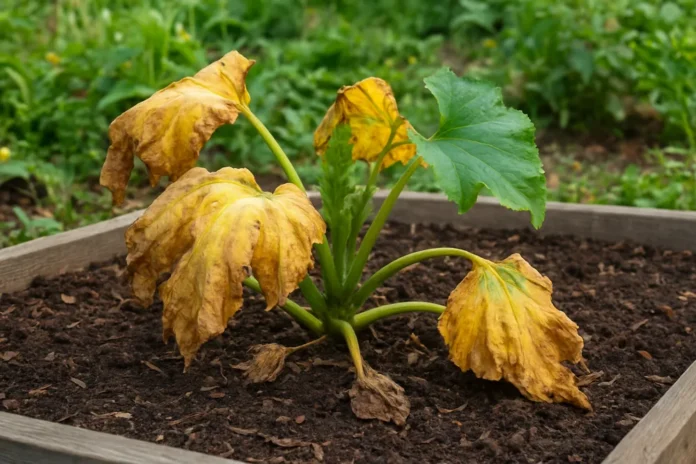
A zucchini plant usually starts dying because of squash vine borers, disease, watering stress, or root damage. Heat, poor drainage, and heavy pest pressure can also weaken it fast.
When a healthy zucchini suddenly wilts, yellows, or collapses, it can feel like it happened overnight. In my garden, zucchini plants often look vigorous right up until something serious starts working against them, which is why the exact symptom pattern matters so much.
A plant that is "dying" may actually be dealing with one main issue such as vine borer damage, powdery mildew, root rot, drought stress, or a heavy aphid infestation. The good news is that zucchini usually gives clues before it fully fails, and those clues can help you decide whether the plant can recover or whether it is better to remove it and protect the rest of the bed.
If your zucchini plant dying problem seems sudden, start by looking at the whole plant rather than just one bad leaf. The stem base, newest leaves, soil moisture, and fruit development usually tell the real story faster than the oldest leaves do.
What Dying Zucchini Plants Usually Look Like
Zucchini decline can show up in several ways. Sometimes the entire plant wilts in the afternoon and never recovers by morning. Sometimes lower leaves yellow first, then the plant stalls and stops setting fruit. In other cases, the plant looks fine except for a rotting stem, collapsed crown, or leaves covered in white mildew.
- Leaves wilting even when the soil is not dry
- Yellowing that starts at the bottom and moves upward
- Mushy, dark, or narrowed stem tissue near the crown
- White powdery coating on leaves
- Chewed, stippled, or curled foliage from insect feeding
- Flowers appearing but fruit shriveling or rotting
- A once-large plant suddenly collapsing in midsummer
When I diagnose zucchini, I look first at how fast the decline happened. A plant that crashes almost overnight often points to vine borers or severe root failure, while a slow fade usually suggests disease, nutrient stress, or chronic watering problems.
Squash Vine Borers Are One of the Most Common Reasons
If your zucchini plant looked strong and then suddenly wilted despite decent soil moisture, squash vine borers are high on the suspect list. These pests tunnel into the stem near the base and feed inside the plant, cutting off water flow. One day the plant looks slightly off, and the next it appears to be dying.
The clearest signs are small holes in the stem, sawdust-like frass around the crown, and a plant that wilts during the heat of the day and then stops recovering altogether. If you slice the stem open carefully, you may find a white, grub-like larva inside.
- Sudden wilting of the whole plant or one side of it
- Moist, crumbly frass near the lower stem
- Stem damage right at or just above soil level
- Rapid decline even when leaves were healthy a few days earlier
If you catch vine borers early, you can sometimes save the plant by removing the larva from the stem and mounding soil over healthy nodes so the plant can root again. If the crown is badly hollowed out, recovery is less likely. In many home gardens, prevention matters more than rescue.
Watering Problems Can Mimic Disease
Underwatering and Heat Stress
Zucchini plants are big, thirsty growers, and hot weather can make them droop fast. In dry soil, leaves wilt, growth slows, and fruit may become misshapen or abort while still small. A plant stressed this way may look like it is dying, especially during a heat wave.
Check the soil a few inches down instead of judging by the dry surface. If the root zone is dry and the leaves perk back up by evening or early morning after watering, drought stress is a likely cause. Repeated cycles of bone-dry soil followed by heavy soaking can also split fruit and weaken the plant.
Overwatering and Poor Drainage
Too much water can be just as damaging. In soggy soil, zucchini roots struggle for oxygen and may begin to rot. The plant then wilts even though the soil is wet, which confuses many gardeners. Leaves may yellow, the stem base may soften, and growth may stall.
- Dry soil plus limp leaves points more toward underwatering
- Wet soil plus limp leaves points more toward root stress or rot
- Container zucchini decline faster if drainage holes are limited
- Heavy clay soil often keeps roots too wet after frequent irrigation
I would rather water zucchini deeply and less often than give it a little every day. Shallow daily watering keeps the topsoil damp but often leaves roots weak and the plant more vulnerable when hot weather arrives.
Stem and Root Rot Can Cause Collapse
When the crown or roots are infected by rot organisms, the plant may look tired at first and then fail quickly. You may notice a constricted stem near the soil line, dark mushy tissue, or a sour smell around the base. This is especially common in poorly drained beds, overwatered containers, or after long stretches of warm, wet weather.
Root rot often causes yellow leaves, weak new growth, and wilting that does not improve after watering. If you pull a severely affected plant, roots may be brown instead of firm and white. Once the crown is badly rotted, the plant usually will not recover.
The best response is to remove the worst plants, avoid replanting squash in the same exact spot right away, and improve drainage before the next round. Raised beds, wider spacing, and watering early in the day all help reduce repeat problems.
Powdery Mildew and Other Leaf Diseases Weaken Zucchini Fast
Zucchini commonly struggles with powdery mildew, especially later in the season. At first it appears as pale spots or a dusty white coating on leaves. As it spreads, leaves yellow, dry out, and lose the ability to support the plant's heavy fruiting demand.
Powdery mildew alone does not always kill a mature plant right away, but it can push an already stressed plant over the edge. If your zucchini is also dealing with heat, inconsistent watering, or pest damage, mildew can speed up the decline.
How Leaf Disease Usually Shows Up
- White or gray powdery patches on upper leaf surfaces
- Yellowing leaves that eventually turn brown and crisp
- Reduced vigor and fewer healthy fruits
- Damage starting on older leaves and spreading through the canopy
Other diseases such as bacterial wilt, downy mildew, and viral infections can also damage zucchini, though the exact symptoms vary. Viral issues often cause mottled leaves, distortion, and poor fruit quality. Bacterial wilt can cause sudden wilting, though it is more often associated with cucumber beetle activity.
Pests Other than Vine Borers May Be Draining the Plant
Zucchini can host aphids, squash bugs, cucumber beetles, and spider mites. A small amount of feeding is rarely fatal, but large populations weaken the plant, spread disease, and reduce flowering and fruit development.
Squash Bugs
Squash bugs suck sap from leaves and stems, causing yellow speckling, browning, and wilting. Their feeding stress can make a zucchini plant look drought-stricken even when water is adequate. Check leaf undersides for bronze egg clusters and look near the crown for gray-brown bugs.
Aphids and Mites
Aphids gather on soft new growth and under leaves, causing curling and sticky residue. Spider mites create fine stippling and may leave faint webbing in hot, dry weather. Neither always kills zucchini by itself, but both can weaken it enough that disease and heat finish the job.
If the newest leaves are the most distorted, I look hard for insects before I blame nutrients. Nutrient problems usually show a broader, more even pattern, while pests tend to create patchy damage where they are actively feeding.
Poor Pollination and Fruit Rot Can Make the Plant Seem Worse than It Is
Sometimes the plant itself is not dying, but the fruit is. Zucchini produces separate male and female flowers, and if pollination is poor, tiny fruits may yellow, shrivel, and rot at the blossom end. Gardeners often assume the entire plant is failing when the main issue is incomplete pollination.
This is more common during stretches of rain, extreme heat, or low pollinator activity. A young plant may also produce a few failed fruits before it fully settles into regular production. If the leaves remain vigorous and the stem is healthy, poor pollination is usually a fruit problem rather than a plant-death problem.
- Tiny zucchini starts growing, then turns yellow and soft
- Flowers drop without fruit development
- Healthy foliage but repeated fruit failure
- More common early in the season or during weather swings
Nutrient Issues and Crowded Growing Conditions Can Push Zucchini Downhill
Zucchini is a heavy feeder, and exhausted soil can leave the plant pale, slow, and more susceptible to pests and disease. Nitrogen deficiency often shows up as general yellowing, especially on older leaves first. Potassium and other imbalances can affect vigor and fruit quality too.
That said, true nutrient deficiency is often overblamed. If the plant is collapsing fast, pests, disease, or root trouble are usually more likely than simple feeding issues. Still, cramped spacing, too much shade, and competition from weeds can make a struggling plant look much worse.
Give zucchini full sun, consistent moisture, and enough room for airflow. A crowded patch stays damp longer, spreads disease faster, and makes pest checks harder. In rich soil, one healthy plant often outperforms several crowded plants.
How to Tell if Your Zucchini Can Still Be Saved
A zucchini plant has a decent chance of recovery if the growing point is still alive, the stem base is mostly firm, and you can identify a fixable cause such as temporary drought, mild mildew, or a manageable pest issue. If new leaves are still emerging cleanly, that is a good sign.
Recovery is less likely if the crown is mushy, the stem is hollowed by borers, the entire plant is badly infected, or roots are rotted. In that case, removing the plant may be the smarter move so you can protect nearby crops and avoid wasting time on a plant that will not rebound.
- Save it if the center is still growing and damage is limited
- Remove it if the crown is collapsing or major stem tissue is destroyed
- Keep it if leaf disease is moderate and new growth remains healthy
- Discard it if it is a likely disease reservoir for nearby squash plants
How to Prevent the Next Zucchini Plant From Dying
Prevention starts before transplanting or sowing seeds. Choose a sunny spot with good drainage, add compost, and space plants generously so air can move through the leaves. Healthy, fast-growing zucchini handles stress much better than a cramped, thirsty plant.
Use row covers early if squash vine borers or cucumber beetles are common in your area, then remove them when flowers need pollination. Water deeply at the soil line rather than wetting leaves late in the day. Mulch helps keep soil moisture more even and reduces splashback that spreads disease.
- Rotate squash-family crops when possible
- Inspect stem bases and leaf undersides every few days
- Remove badly diseased leaves promptly
- Harvest zucchini regularly so the plant keeps producing
- Avoid letting weeds crowd the crown area
- Feed the soil well, but do not rely on fertilizer to solve pest or rot problems
In my experience, frequent observation matters as much as any product. Zucchini grows fast, and problems move fast too. Catching one bad stem, one pest cluster, or one early patch of mildew can make the difference between a long harvest and a plant that suddenly gives out.
FAQ
Can a Wilted Zucchini Plant Recover?
Yes, if the cause is temporary drought, heat stress, or a manageable pest issue. Recovery is much less likely if the crown is rotted or the stem has been badly damaged by squash vine borers.
Why Is My Zucchini Wilting Even Though the Soil Is Wet?
Wilting in wet soil often points to root rot, poor drainage, or stem damage rather than thirst. The plant may be unable to move water properly because roots or vascular tissue are failing.
What Does Squash Vine Borer Damage Look Like on Zucchini?
Look for sudden wilting, holes near the base of the stem, and sawdust-like frass around the crown. The stem may feel soft or hollow if larvae are feeding inside.
Should I Cut Off Yellow Leaves on a Dying Zucchini Plant?
Remove leaves that are fully yellow, badly diseased, or collapsed, especially if they are touching the soil. Leave healthy green leaves in place so the plant can keep photosynthesizing while it recovers.
Can Overwatering Kill Zucchini Plants?
Yes. Constantly wet soil can suffocate roots, encourage rot, and cause yellowing and wilting that looks similar to drought stress.
Why Are My Zucchini Fruits Turning Yellow and Rotting when the Plant Still Looks Healthy?
That usually suggests poor pollination rather than a dying plant. Small fruits often start to develop, then abort and rot if the female flowers were not fully pollinated.
Is Powdery Mildew Enough to Kill a Zucchini Plant?
It can weaken the plant significantly, especially late in the season or when other stresses are present. Mild cases rarely kill a vigorous plant quickly, but severe infections can shorten harvest and speed decline.
Want to keep your squash patch productive? Read our guide to the best treatments for squash vine borers, mildew, and common zucchini pests so you can act before another plant crashes.
