

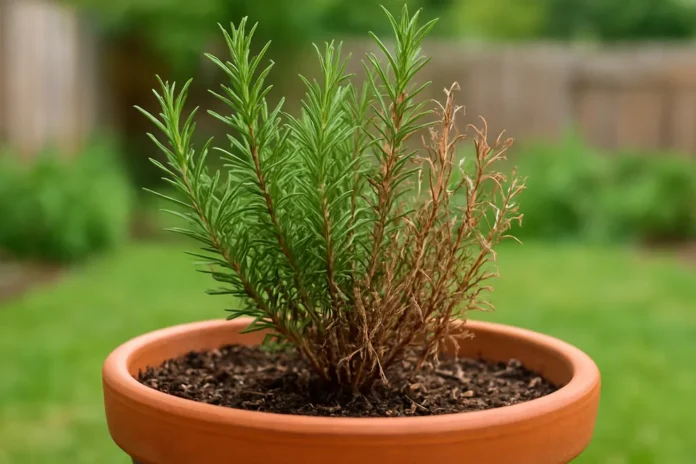
Rosemary usually turns brown because its roots are staying too wet, the plant has dried out too far, or cold weather has damaged the stems and foliage. Browning can also come from poor drainage, root rot, transplant stress, or natural aging in older growth.
When rosemary turning brown shows up, the cause is usually less mysterious than it first seems. This plant likes conditions that are almost the opposite of what harms many common garden plants: fast drainage, plenty of sun, and soil that dries a bit between waterings. When those basics get out of balance, rosemary often responds with brown needles, crispy tips, dying stems, or whole sections that suddenly decline.
I have found that rosemary rarely browns for no reason. The pattern matters. If the whole plant looks dull and limp, I think about water stress first. If the center stays green but outer stems brown after a cold spell, winter damage jumps higher on my list. If the base smells sour or the stems blacken near the crown, I worry about root trouble.
The good news is that brown rosemary is sometimes recoverable, especially when you catch the problem early. The key is figuring out whether the plant is too wet, too dry, too cold, too crowded, or simply aging in spots so you can respond in the right way.
What the Browning Pattern Can Tell You
Before you reach for fertilizer or pruning shears, look closely at how the browning appears. Rosemary gives useful clues. Crispy brown tips often point to dryness, wind exposure, salt buildup, or inconsistent watering. Soft brown or blackened stems near the base suggest rot. Browning on one side of the plant can happen after cold wind, reflected heat, or physical root damage. A few older inner stems turning brown while new outer growth stays healthy can be normal aging.
- Brown, dry, brittle needles: usually drought, root restriction, or winter burn
- Brown with yellowing first: often overwatering, poor drainage, or root stress
- Blackish brown stems near soil level: possible crown rot or root rot
- Brown patches after a freeze: cold injury, especially on exposed tips
- Scattered dead twigs inside an otherwise healthy shrub: normal interior shading or age
When I diagnose rosemary, I do not judge by one branch. I compare the newest tip growth, the middle of the plant, and the base near the soil line. If the base looks worse than the top, I think drainage. If the tips took the hit first, I think weather or inconsistent watering.
Overwatering and Poor Drainage Are the Most Common Causes
If I had to name the most common reason rosemary turns brown, I would pick wet roots. Rosemary is a Mediterranean shrub, not a moisture-loving herb. It tolerates lean, gravelly, fast-draining soil much better than heavy, soggy ground. In gardens with clay soil or in containers without excellent drainage, roots can sit wet for too long and begin to suffocate or rot.
At first, overwatered rosemary may not look dry at all. It can appear faded, dull, or slightly yellow before browning begins. Needles may drop when you brush the stems. Eventually, parts of the plant turn brown because damaged roots cannot move water up to the foliage, even though the soil is still wet. That is why overwatered rosemary can mimic underwatering.
- Soil stays damp for several days after watering
- Pot feels heavy most of the time
- Lower stems or crown area look dark or weak
- Needles yellow, then brown, instead of going straight to crisp tan
- A sour or swampy smell comes from the soil
Container rosemary is especially vulnerable when it is planted in regular potting mix that holds too much moisture. A terra cotta pot and a gritty, well-draining mix usually work better than a large plastic pot packed with peat-heavy soil.
Underwatering and Drought Stress Can Also Brown Rosemary
Even though rosemary likes to dry somewhat between waterings, it is not a cactus. Plants in pots, raised beds, sandy soil, or hot reflected sun can dry out too far. When that happens, the foliage often becomes brittle, gray-green, and crispy before turning fully brown. New growth may stall, and the tips can die back first.
This is common in summer containers because rosemary can go from comfortably dry to seriously thirsty faster than people expect. A root-bound plant is even more vulnerable. Water may race through the pot without fully soaking the root ball, leaving the center dry.
- Needles feel dry and sharp rather than soft
- Tips brown first, especially in hot weather
- Potting soil pulls away from the sides of the container
- The entire plant looks lighter in color and thinner than usual
- Growth near walls, paving, or hot southern exposures browns faster
If a container rosemary has gone bone dry, I prefer to rehydrate it slowly and thoroughly rather than splash a little water on top. Sometimes I water, wait ten minutes, and water again so the dry root ball actually absorbs moisture instead of shedding it.
Root Rot and Crown Rot Can Kill Stems Quickly
When browning spreads fast or whole stems suddenly collapse, root rot or crown rot may be involved. These problems are often triggered by the same conditions as overwatering: compacted soil, poor drainage, saucers that stay full, or repeated irrigation in cool weather. Fungal pathogens take advantage of stressed roots and start breaking tissue down.
The crown is the area where the stems meet the soil. If that zone stays wet, stems may turn dark, lose firmness, and die from the bottom up. Once rosemary reaches that stage, recovery becomes harder. Pruning the brown stems may improve appearance, but it will not solve the underlying disease if the roots remain in soggy soil.
In severe cases, you may find roots that are dark, mushy, or sparse instead of pale and firm. A badly rotted plant often declines even after watering is reduced because too much of the root system is already gone.
Cold Damage and Winter Burn Often Show Up as Brown Foliage
Rosemary is not equally hardy in every part of the U.S., and many browning problems show up after winter. A hard freeze, drying winter wind, or repeated thaw and refreeze cycles can turn stems brown even when the plant looked fine in fall. Tender varieties are especially vulnerable, and container plants are less insulated than rosemary growing in the ground.
Cold damage often affects the outermost growth or the top side exposed to wind. Needles may first look gray-green or water-soaked, then dry to brown. Sometimes the stems remain alive lower down and push fresh shoots in spring. In other cases, the entire stem is dead and should be pruned back once new growth begins elsewhere.
- Browning appears after a freeze or harsh winter wind
- Exposed tips are worse than sheltered interior growth
- One side of the plant is more damaged than the other
- Roots seem healthy, but stems above are dry and brittle
- New spring shoots emerge below the damaged area
Too Little Sun and Crowded Conditions Weaken Rosemary
Rosemary wants full sun. In shady spots it becomes thinner, less aromatic, and more prone to browning from stress or disease. Low light slows drying after rain or watering, which increases the risk of fungal problems around the crown and roots. Dense nearby plants can also block airflow and keep foliage damp too long.
This does not always cause sudden browning, but it can set the stage for a gradual decline. The center may thin out, interior twigs may die, and the whole shrub can look patchy. If your rosemary gets only a few hours of direct sun, especially morning shade plus damp soil, that combination often explains why it never seems fully happy.
Pests and Disease Are Possible but Less Common
Rosemary is usually not a magnet for pests, but stressed plants can attract spider mites, spittlebugs, or sap-sucking insects. Spider mites are more likely in hot, dry indoor or patio conditions. They can cause stippled, dull foliage that later bronzes or browns. Fungal leaf issues may also appear where airflow is poor and leaves stay damp.
If you suspect pests, check the undersides of foliage and the joints where stems branch. Fine webbing, pale speckling, or sticky residue are stronger clues than browning alone. The important point is that pests are often a secondary problem on a plant already weakened by watering mistakes or poor conditions.
I treat pests on rosemary as a clue to plant stress, not just a separate problem. A healthy rosemary in bright sun with sharp drainage usually shrugs off minor infestations much better than one struggling in damp or dim conditions.
Transplant Shock, Root Binding, and Pruning Mistakes
A rosemary plant that recently moved from nursery pot to garden bed, from indoors to outdoors, or from one container to another may brown from shock. Root disturbance, abrupt sun exposure, or a change in watering rhythm can all trigger stress. Some needle drop and a bit of browning can happen while the plant adjusts.
Root-bound rosemary can also decline. When roots circle densely inside the pot, water either runs straight through or the plant dries out unusually fast. Browning then becomes a symptom of a cramped root system rather than a simple lack of water. Repotting into a slightly larger container with fast-draining mix often helps.
Pruning matters too. Cutting deeply into old, leafless woody stems can leave bare sections that may not resprout well. If too much growth is removed at once, the remaining plant can struggle and brown back in places. Rosemary usually responds best to light shaping and harvesting from green, active growth rather than severe hard cuts into old wood.
How to Fix Brown Rosemary and Help It Recover
The right fix depends on the cause, but the recovery plan usually starts with improving root conditions. If the soil is staying wet, reduce watering and make sure excess water drains freely. Remove any saucer water under containers. If the plant is in dense garden soil, you may need to replant in a raised, sharply drained spot rather than trying to nurse it along where it sits.
- Check soil moisture a few inches down before watering again.
- Trim fully dead stems back to green tissue, but do not strip the plant aggressively.
- Move container rosemary to full sun if it has been growing in partial shade.
- Repot root-bound plants into a container with drainage holes and gritty mix.
- Hold fertilizer unless the plant is actively growing and otherwise healthy.
- Protect from severe winter exposure with a sheltered location or cold protection if rosemary is marginally hardy in your area.
If only the tips or a few branches are brown, recovery is often straightforward. If the entire base is dark and the roots are mushy, the plant may not be salvageable. In that case, it is usually better to start fresh with a new plant and correct the drainage issue first.
When a stressed rosemary still has some green growth, I avoid the urge to fertilize my way out of trouble. Fertilizer cannot repair damaged roots, and it sometimes pushes weak, tender growth before the plant has actually recovered.
How to Prevent Rosemary From Turning Brown Again
Prevention comes down to matching rosemary with the conditions it prefers. Give it as much direct sun as you can, especially in cooler climates. Plant it in soil that drains quickly. In containers, choose a pot with drainage holes and avoid oversized containers that keep soil wet too long. Water deeply, then let the root zone dry somewhat before watering again.
- Use fast-draining soil rather than rich, moisture-retentive mixes
- Space plants for airflow and faster drying after rain
- Avoid automatic irrigation that waters too often
- Bring tender container rosemary to a protected spot before severe cold
- Prune lightly and regularly instead of cutting hard into old wood
- Replace failing plants only after fixing drainage, light, or winter exposure issues
Rosemary is one of those herbs that usually thrives with a little benign neglect. Once it has sun, air, and drainage, it often becomes much easier to grow. Most browning problems start when we treat it like a thirsty annual instead of a woody Mediterranean shrub.
FAQ
Can Brown Rosemary Turn Green Again?
Brown needles and dead stems will not turn green again. What you are hoping for is new green growth from still-living parts of the plant after the problem is corrected.
Should I Cut Off the Brown Parts of My Rosemary?
Yes, if the stems are truly dead and brittle, prune them back to live green tissue. Wait until you can clearly see what is alive, especially after winter damage, so you do not remove stems that may still resprout.
How Often Should I Water Rosemary?
There is no fixed schedule that works everywhere. Water when the root zone has dried somewhat, then soak thoroughly and let excess water drain away. Container plants usually need water more often than in-ground plants.
Why Is My Potted Rosemary Turning Brown Indoors?
Indoor rosemary often browns from low light, stale air, and watering that stays too frequent for slower indoor growth. Dry heating air and spider mites can add stress, but weak light and wet roots are the biggest indoor issues.
Is My Rosemary Dead if It Is Brown After Winter?
Not always. Scratch a small section of stem with your fingernail. Green tissue underneath suggests that part is still alive, while dry brown tissue all the way through usually means that section is dead.
Does Rosemary Like Coffee Grounds or Rich Fertilizer?
Usually no. Rosemary prefers leaner conditions and sharp drainage more than heavy feeding. Coffee grounds and rich amendments can hold moisture and make the root zone less suitable if overused.
Can Rosemary Recover From Root Rot?
It can recover if the damage is mild and you correct the wet conditions quickly. Severe root rot, especially when the crown has blackened and many stems are collapsing, is much harder to reverse.
Need the right fix fast? Read our guide to the best soil mixes, pots, and care tools for rosemary so you can stop the browning and get healthy growth back sooner.
