

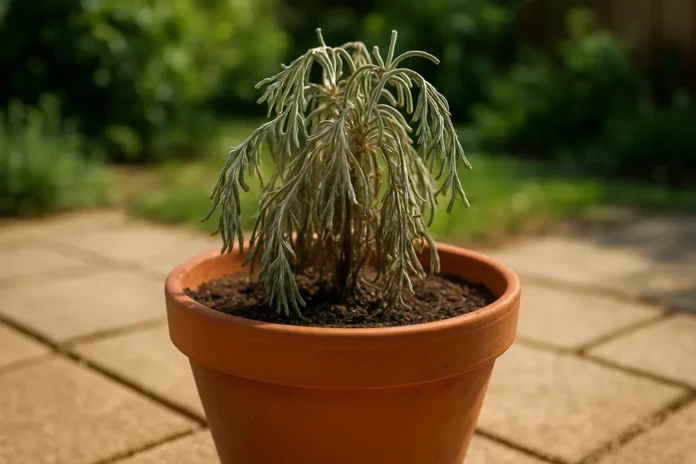
Rosemary usually wilts because its roots are stressed, most often from too much water, poor drainage, or root damage. Heat, cold snaps, transplant shock, and advanced drought can also make it droop.
A wilted rosemary plant can be confusing because this herb has a reputation for being tough, drought tolerant, and easygoing once established. When I see rosemary wilting, I do not automatically assume it needs water. In fact, one of the most common mistakes gardeners make is watering more when the plant is already struggling from soggy roots.
Rosemary tends to wilt when something interferes with how its roots take up moisture and oxygen. That can happen from overwatering, compacted soil, root rot, transplant shock, extreme heat, cold injury, or a container that drains too slowly. The good news is that the plant often gives other clues along with wilting, and those clues can help you narrow down the real cause before the problem gets worse.
If your rosemary plant looks limp, faded, or soft, start by looking at the whole situation instead of the leaves alone. Where it is planted, how often it is watered, what the weather has been doing, and how the soil feels will usually tell you much more than the droop itself.
What Wilted Rosemary Is Really Telling You
Wilting is not a disease by itself. It is a symptom that says the plant cannot move water properly from the roots up through the stems. That can happen when the plant is too dry, but rosemary more often wilts because the roots are staying too wet and losing access to oxygen. Once roots are stressed, the top growth starts to droop even while the soil still feels moist.
The first distinction to make is whether the rosemary is in the ground or in a container. Potted rosemary declines faster because potting mix can swing from soaking wet to bone dry in a short time. Garden-grown rosemary usually struggles when the soil is heavy, the planting site stays damp, or the crown sits too low.
When I diagnose wilted rosemary, I look at the stems before I look at the leaves. If the stems near the base feel dark, soft, or weak, I suspect excess moisture much sooner than drought.
Overwatering and Poor Drainage Are the Most Common Causes
Why Too Much Water Makes Rosemary Droop
Rosemary is native to dry, lean, fast-draining conditions. Its roots are adapted to airier soil than many common garden plants prefer. If the soil stays wet for long stretches, the roots cannot breathe well, and the plant starts to wilt even though there is plenty of moisture present. This is one of the reasons rosemary often declines in decorative pots without drainage holes, rich raised bed mixes, or clay soil that drains slowly after rain.
Signs the Problem Is Excess Moisture
- The soil feels damp or cold several inches down.
- The plant droops even though it was watered recently.
- Lower stems begin to brown or soften.
- Leaves may look dull, gray-green, or start dropping.
- The plant smells sour or swampy near the base in severe cases.
- Wilting gets worse after rain or after you water.
If that sounds like your plant, stop watering on autopilot. Let the soil dry more deeply between waterings, and make sure the root zone can drain. In containers, that may mean repotting into a gritty mix with extra perlite, pumice, or coarse sand. In the ground, it may mean moving the plant to a raised area or amending a tight site with more mineral material rather than piling on compost alone.
Root Rot Can Look Like Thirst
If overwatering continues, rosemary can develop root rot. At that point the plant may look wilted, faded, and dry from the top down because the damaged roots are no longer able to support the foliage. Many gardeners see the droop and add still more water, which speeds up the decline.
How to Tell if Root Rot Has Started
- Roots look brown, mushy, or stringy instead of firm and pale.
- The crown at the soil line darkens.
- Stems become brittle at the tips but soft near the base.
- New growth stalls completely.
- The plant does not recover overnight even when temperatures cool.
A mildly affected plant can sometimes be saved by cutting away rotted roots, repotting into sharply draining soil, and reducing watering. A badly rotted plant often collapses quickly and may not come back. If only a few healthy branch tips remain, taking cuttings may be the best way to preserve the plant.
Do not judge recovery by old wilted stems. With rosemary, I watch for firm stem tissue and fresh tip growth. If new growth appears after the roots dry out, the plant still has a good chance.
Underwatering and Heat Stress Can Also Cause Wilting
Although overwatering is more common, rosemary absolutely can wilt from drought, especially in containers, newly planted specimens, and plants growing against hot walls or on sunny patios. Dry root zones cannot supply enough water to support the leaves, and the entire plant may sag during the hottest part of the day.
Signs Rosemary Is Too Dry
- The pot feels very light when lifted.
- Soil pulls away from the sides of the container.
- Needle-like leaves feel crisp rather than soft.
- Branch tips brown from the ends inward.
- The plant perks up noticeably after a deep watering.
Temporary afternoon droop during extreme heat can also happen even when the root zone has some moisture. In that case, the plant may look better again by evening. Repeated heat stress is harder on newly planted rosemary because its roots have not spread enough to buffer temperature swings or dry spells.
If drought is the issue, water deeply and then allow the top inch or two of soil to dry before watering again. Shallow, frequent sips encourage weaker root patterns and make the plant more dependent on constant attention.
Transplant Shock and Root Disturbance Often Cause Sudden Droop
Rosemary does not always appreciate being moved, especially when roots are teased apart aggressively or planted into soil very different from the original potting mix. A recently transplanted plant may wilt because the roots were disturbed, the top growth is losing moisture faster than the roots can replace it, or the new site is hotter and windier than before.
Typical Transplant Stress Clues
- Wilting starts within a day or two of planting.
- The soil may be properly moist, but the plant still droops.
- Outer tips curl or dry first.
- The plant was planted during hot weather or in full afternoon sun.
- There is little to no new growth for a couple of weeks.
Transplant shock usually improves with stable moisture, good drainage, and a little time. Avoid fertilizing a stressed rosemary right away. Rich feeding can push soft top growth before the roots are ready to support it.
Cold Injury and Winter Wet Can Make Rosemary Wilt
In many parts of the U.S., rosemary is stressed more by winter conditions than by summer ones. A hard freeze, cold wind, or repeated thaw-freeze cycle can damage stems and roots, leading to wilted or collapsing branches. Winter wet makes this worse because cold, soggy soil keeps roots inactive and vulnerable.
What Cold Damage Looks Like
- Wilting appears after a cold snap rather than after watering.
- Leaves turn gray, blackened, or tan.
- Stem tips die back unevenly.
- One side of the plant is worse, often the wind-exposed side.
- Soil remains wet for long periods in winter.
Do not rush to prune heavily right after a freeze. Wait until you can clearly see which stems remain alive. Green tissue under the bark is a good sign, while dry brown tissue all the way through is not.
Pests and Disease Are Less Common but Still Possible
Rosemary is not a magnet for pests, but weak or indoor-grown plants can still have trouble. Spider mites, aphids, and whiteflies may feed on stems and leaves, especially when air circulation is poor. Heavy infestations can contribute to droop by stressing the plant and reducing vigor.
Symptoms That Point Toward Pests or Disease
- Fine webbing or stippled leaves, which often suggests spider mites.
- Sticky residue or visible clusters of insects on stems.
- Spotted, blotched, or distorted foliage.
- Localized stem dieback rather than whole-plant droop.
- Moldy growth in crowded, humid conditions.
Most rosemary disease issues still circle back to too much moisture and too little airflow. If the plant is indoors, move it to the sunniest possible window and avoid crowding it among other plants. Outdoors, thinning nearby growth can help foliage dry faster after rain or dew.
How to Tell Which Cause Is Most Likely
Because wilting can come from opposite problems, the best approach is to match the symptom with recent conditions. One clue on its own is not enough. Use the soil, weather, and stem condition together.
- Feel the soil 2 to 3 inches down. Dry and dusty suggests drought, while cool and wet suggests overwatering or drainage trouble.
- Check the pot or planting area. A heavy pot, saucer full of water, or low-lying bed points toward root stress from excess moisture.
- Look at the stems near the base. Soft, dark, or weak tissue is more concerning for rot than simple thirst.
- Think about timing. Wilting after transplanting, after a heat wave, or after a freeze often reveals the trigger.
- Inspect for pests if the moisture picture does not explain the decline.
Pattern matters more than panic. If the whole plant droops after every watering, I suspect drainage. If only the outer tips crisp during a hot spell, I lean toward drought or transplant stress.
What to Do Right Now for Wilted Rosemary
Once you have a likely cause, act in a way that supports the roots rather than forcing top growth. Rosemary recovers best when conditions become steadier and drier, not richer and wetter.
If the Soil Is Too Wet
- Pause watering until the soil dries noticeably.
- Empty any saucer that holds standing water.
- Move containers into brighter sun and better airflow if appropriate.
- Repot into a fast-draining mix if the current medium stays soggy.
- Trim off obviously dead stems after you confirm they are brown inside.
If the Soil Is Too Dry
- Water deeply until excess drains out or the root zone is evenly moistened.
- Rewet very dry potting mix slowly so it actually absorbs water.
- Give a newly planted rosemary temporary relief from intense afternoon heat if needed.
- Resume watering only when the soil begins to dry again.
If the Plant Was Recently Transplanted
- Keep moisture even but not wet.
- Protect it from harsh wind for the first week or two.
- Skip fertilizer until you see fresh growth.
- Avoid repeated moving or repotting.
If your rosemary is severely rotted, heavily frozen, or almost entirely brown, replacement may be more realistic than rescue. Herbs are productive plants, and sometimes starting over in a better site is the fastest path back to a healthy bush.
How to Prevent Rosemary From Wilting Again
Healthy rosemary is all about matching the plant to the right conditions. Once established in sun and sharp drainage, it often needs less fuss than people expect.
- Plant in full sun with fast-draining soil.
- Use containers with drainage holes and airy potting mix.
- Water deeply but infrequently instead of on a rigid schedule.
- Avoid heavy mulch piled against the crown.
- Do not overfertilize. Rosemary prefers leaner conditions.
- Protect borderline-hardy varieties from severe winter exposure.
- Prune lightly to keep the plant dense and better ventilated.
I have found that gardeners lose more rosemary to kindness than neglect. When the plant gets sun, airflow, and room for its roots to dry between waterings, wilting problems become much less common.
FAQ
Can Rosemary Recover After Wilting?
Yes, if the roots are still healthy enough to support new growth. Rosemary often recovers from temporary drought, heat stress, or mild transplant shock, but advanced root rot or severe freeze damage is much harder to reverse.
Should I Water Wilted Rosemary Right Away?
Not automatically. Check the soil first because rosemary often wilts from excess moisture rather than thirst. Water only if the root zone is genuinely dry.
Why Is My Potted Rosemary Wilting More than the One in the Garden?
Containers create faster moisture swings and can trap too much water if the mix is dense or drainage is poor. Potted rosemary also heats up and dries out faster in summer, so both overwatering and underwatering are more common in pots.
Does Rosemary Wilt After Repotting?
It can. Root disturbance, a sudden change in light, and overly wet fresh potting mix can all cause temporary droop after repotting, especially if the plant was already stressed.
How Do I Know if Rosemary Has Root Rot?
Look for wet soil that stays damp, soft dark stems near the base, and brown mushy roots if you slide the plant from its pot. A rosemary with root rot often wilts without improving after watering.
Can Hot Weather Make Rosemary Wilt Even if It Is Drought Tolerant?
Yes. Extreme heat can cause temporary droop, especially in containers or newly planted rosemary with limited roots. Established plants usually recover in the evening if the roots are otherwise healthy.
Is Wilted Rosemary Dead if the Leaves Turn Brown?
Not always. Scratch a small section of stem and look for green tissue underneath. If the interior is green and firm, part of the plant may still be alive even if some outer growth has browned.
Need the right setup to keep rosemary healthy? Read our guide to the best soil mixes, pots, and pruning tools for rosemary so you can fix drainage problems and grow a stronger plant faster.
